


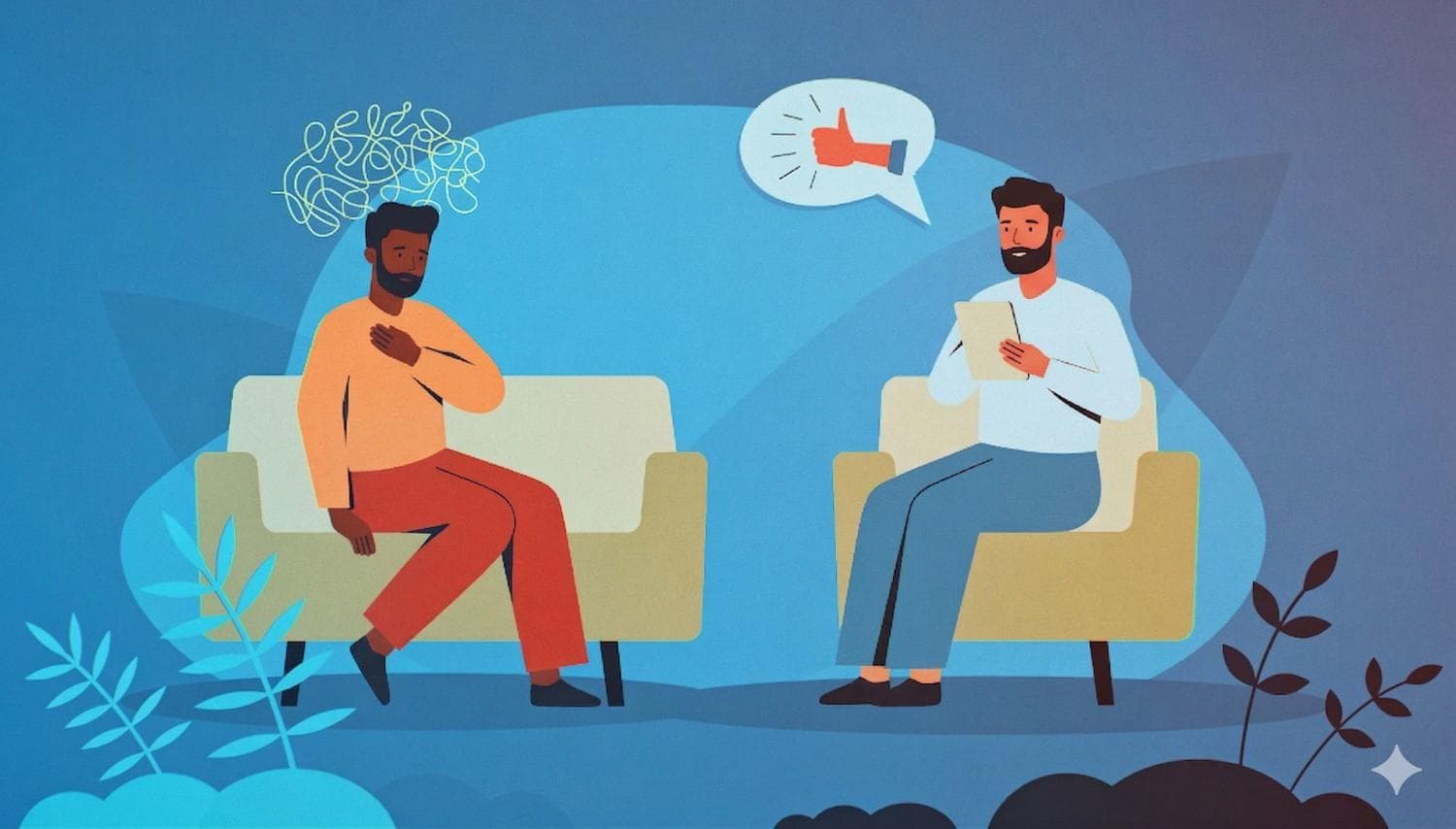
Are You Kind? or Just Afraid to Disappoint People?
12 min read
Some people enter every relationship already prepared to give something up before anyone even asks.
They say, “It’s fine,” too quickly.
They apologize often.
They soothe other people’s anger.
And they carry more than they can handle so they do not embarrass anyone, upset anyone, or appear selfish.
From the outside, this may look like extra kindness, strong values, or good manners.
But in many cases, the issue runs much deeper than that.
Sometimes the problem is not simply that you are a kind person, but that you have grown used to tying your comfort to other people’s comfort, and to feeling that any objection, refusal, or clear boundary might threaten the relationship or your image in front of others.
This is where kindness begins to shift from a virtue into a burden.
What does people-pleasing really mean?
People-pleasing is not a separate personality trait, and it is not simply another word for kindness or cooperation.
More accurately, it is a repeated behavioral pattern in which you tend to place other people’s expectations, feelings, and comfort above your own needs, especially when you feel that saying “no” will bring tension, guilt, or rejection.
In simpler terms:
You do not always agree because you are convinced. Sometimes you agree because you do not want to pay the emotional price of refusing.
That is the essential difference.
A genuinely generous person helps because they want to help.
A people-pleaser, however, often helps because they cannot bear to disappoint someone, create discomfort, or carry the anxiety that comes after setting a clear limit.
Healthy kindness is not the same as people-pleasing
It is important to distinguish between three things that people often confuse:
1) Healthy kindness
Helping, cooperating, and considering other people’s feelings without erasing yourself.
2) Excessive self-sacrifice
When helping turns into a draining habit that leaves you exhausted, silent, and full of bottled-up anger.
3) Conflict avoidance
Saying “yes” only to avoid tension, guilt, or someone else’s reaction, not because you truly want to say “yes.”
Not every kind person is a people-pleaser.
And not everyone who struggles to refuse is kind in a healthy sense.
Sometimes what looks like kindness is simply fear wrapped in politeness.
How do the Big Five explain this pattern?
According to the Big Five personality model, people-pleasing usually does not come from just one factor, but from a combination of more than one trait and more than one finer-grained aspect of personality.
This is where a detailed personality reading becomes valuable, because it does not stop at broad traits. It helps explain the specific dynamics that drive a person into this pattern.
Agreeableness: the pull toward harmony and consideration
When Agreeableness is high, especially in facets such as Cooperation and Sympathy, a person tends to avoid hurting others, reduce tension, and prioritize harmony over friction.
That is not a problem in itself.
In fact, it can be one of the most beautiful parts of personality.
But when it becomes very high, without clear boundaries, a person may begin giving in even in matters that affect their time, rights, and basic needs.
Neuroticism: when kindness becomes a way to reduce anxiety
This is where one of the most important explanations appears.
High Neuroticism, especially in facets such as Anxiety, Self-Consciousness, and Vulnerability, makes a person more sensitive to signs of rejection or disapproval.
A tone of voice, a delayed reply, or a small shift in facial expression may be interpreted internally as a threat to the relationship, affection, or acceptance.
In that case, people-pleasing stops being just a social habit and becomes a quick way to calm inner anxiety.
Extraversion: low assertiveness despite inner clarity
Not everyone who pleases people is unaware of what they want.
Many of them know very well what they want to say, but they cannot say it clearly and directly.
Here, the facet of Assertiveness within Extraversion becomes important.
When Assertiveness is low, a person may hesitate, delay, over-explain, and eventually agree simply so things do not become more complicated.
Conscientiousness: the trap of duty and excessive obligation
Some people do not please others only out of fear, but also out of a rigid sense of duty.
This is where Conscientiousness becomes relevant, especially the facet of Dutifulness.
Inside, this person is not only saying:
“I’m afraid they’ll be upset.”
They are also saying:
“I should help,”
“It would be wrong to refuse,”
“A good person carries the burden.”
That is why we may find highly successful, organized, and responsible people who are also among the most vulnerable to exhaustion, because they treat every request as if it were a moral duty.
Openness to Experience: emotional absorption of other people’s feelings
In some people, high Emotionality within Openness to Experience can make them more affected by what others feel.
They do not just understand another person’s distress. They quickly absorb their tension, anger, or discomfort.
When that happens, pleasing the other person becomes an attempt to calm the atmosphere and, at the same time, calm themselves.
Hidden mechanisms that make us erase ourselves
Several recurring psychological mechanisms often sit behind this pattern:
Self-silencing
This is when a person suppresses their real needs, objections, or opinions in order to preserve the relationship or secure acceptance.
Rejection sensitivity
This is the anxious expectation of rejection or disapproval, which drives a person to pre-empt it through accommodation and compliance.
Low tolerance for guilt
Some people do not agree because they want to, but because they cannot tolerate the feeling of guilt that follows refusal.
Tying self-worth to other people’s approval
When external approval becomes the main source of self-worth, even a small objection from someone else can feel internally overwhelming.
Signs that may reveal you are pleasing people more than you should
This is not about diagnosing yourself from an article, but there are recurring signs worth noticing:
- You feel immediate relief after saying “yes,” even when you did not want to.
- You over-explain simple boundaries, as if you need to justify your right to refuse.
- You agree in the moment, then later feel upset, regretful, or angry with yourself.
- You feel an exaggerated sense of guilt after any refusal, even when the request was minor.
- You notice tiny shifts in people’s faces or tone and build large conclusions around them.
- You quickly know what others need, but stumble when someone asks, “What do you want?”
- You apologize too often, sometimes for things that were not your fault at all.
- You keep trying to be the easy person: easy at work, easy in the family, easy in the relationship.
These are not just matters of “good manners” or “good upbringing.”
Sometimes they reflect a repeated pattern of self-silencing and putting others before yourself over and over again.
The hidden cost of people-pleasing
Many people think this behavior protects relationships and reduces conflict.
The problem is that its cost usually does not appear immediately. It builds quietly over time.
In relationships
A relationship may look calm from the outside, but remain unbalanced on the inside.
You keep adapting, avoid what bothers you, and postpone your needs, until one silent feeling starts to grow:
I am always present, but I am not truly seen.
Over time, you may find yourself in a relationship where the other person does not really know you, because they became used to a version of you that never objects, never asks, and never sets limits.
In the family
You may become the person who fixes everything, absorbs everyone’s anger, and carries the emotional weight for others.
And when you are exhausted, no one notices quickly, because everyone is used to you always being “there.”
At work
This is where people-pleasing becomes especially costly.
You take on extra tasks, avoid direct correction, delay speaking about your pressure, and may end up working more than others while asking for less.
People who confuse Assertiveness with aggression may also lose important opportunities: in negotiation, in asking for a raise, in leading a team, and in protecting their time and role boundaries.
Inside yourself
This is the deepest cost of all.
Constant self-sacrifice can weaken your connection to your real wants.
Over time, the problem is no longer only that you do not say what you want, but that you no longer know clearly what you want in the first place.
The most common misconceptions
“I’m just a kind person”
Maybe.
But kindness alone does not explain everything.
If helping others always comes with fear, guilt, anxiety, or bottled-up anger, then the issue is not kindness alone.
“If I stop pleasing people, I’ll become selfish”
That is not true.
The healthy alternative is not harshness. It is kindness with assertiveness: respecting others without erasing yourself.
“Saying yes saves me from problems”
It may save you from the tension of the moment, but it creates delayed problems: exhaustion, resentment, inner buildup, and unclear relationships.
“People will love me more if I am always available”
Sometimes the opposite happens.
Constant accommodation may attract exploitation more than respect.
“This is just good values and good manners”
Good values do not require you to lose yourself.
And good manners do not mean treating your needs as less important than everyone else’s all the time.
Why is it so hard to say “no”?
Because for many people, the problem is not the word itself, but the feelings that come after it.
Some people do not fear refusal as much as they fear what follows it:
guilt, anxiety, the feeling of being a bad person, or the sense that the relationship has become threatened.
That is why advice like:
“Just learn to say no.”
often fails.
A person may be able to say it in theory, but may not be able to tolerate its emotional aftermath.
Real improvement begins when you understand that the discomfort you feel after setting a boundary is not proof that you did something wrong. It may simply be proof that you stepped outside an old pattern you had become used to.
How do you begin to leave this pattern without losing your kindness?
The goal is not to become cold or confrontational.
The goal is to move from pleasing people out of fear to treating them with kindness by choice.
1) Do not answer immediately
If someone asks something of you, do not make an instant response your default.
For example, say:
Let me check my schedule and get back to you.
This simple sentence interrupts the automatic rush to agree.
2) Use a short, clear refusal
The more you over-explain, the more you may feel internally that you are doing something wrong.
Clarity is calmer than long justification.
For example:
I appreciate your request, but I can’t commit to this right now.
3) Learn to tolerate temporary guilt
Not every feeling of guilt means you have wronged someone.
Sometimes it is simply an old residue from being used to putting other people ahead of yourself.
4) Distinguish empathy from rescue
You can understand another person’s distress without making yourself responsible for removing it completely.
5) Ask yourself before agreeing
- Do I actually want to do this?
- Can I realistically do it?
- Am I agreeing because I am convinced, or because I cannot bear the discomfort?
- How will I feel a few hours from now if I say yes?
6) Practice intentional “small disappointments”
Start with simple situations: choose the place you prefer, decline a small request, or postpone something that does not suit you.
The point is not defiance. It is training your psychological system to learn that a relationship does not collapse every time you do not please everyone.
What can your personality results reveal?
Not everyone who pleases people does it for the same reason.
One person may be driven by high Sympathy.
Another by strong Anxiety and Self-Consciousness.
A third by an exaggerated sense of Dutifulness.
And a fourth by low Assertiveness despite good intentions.
This is where a more detailed personality reading becomes useful.
When you see your results at the level of the Big Five traits and the thirty facets in your detailed report, the question becomes deeper than:
Am I a kind person?
It becomes more precise questions such as:
- Is my main issue Assertiveness?
- Am I overly sensitive to reactions because of Anxiety or Self-Consciousness?
- Do I carry too much because of Dutifulness?
- Am I confusing healthy Sympathy with constant self-sacrifice?
This kind of insight does not just give you a broad description. It brings you closer to the real reason behind your behavior and makes change clearer and more realistic.
Conclusion
Not every kind nature is a burden.
But the kind nature that makes you stay silent too often, agree too often, apologize too often, and carry more than you can bear is not always a pure virtue.
Sometimes it is a way of protecting yourself from anxiety, rejection, guilt, or confrontation.
Breaking free from people-pleasing does not mean becoming less human.
It means becoming more balanced:
kinder to others,
and fairer to yourself.
Understand what drives this pattern inside your personality
If you see yourself in these patterns, it may help to understand what is driving them inside your personality.
Some people need to build Assertiveness.
Some need to calm rejection sensitivity linked to Anxiety and Self-Consciousness.
Some need to separate kindness from a constant sense of Dutifulness.
A personality test based on the Big Five model (OCEAN) gives you a deeper reading of your traits and finer details, helping you see where healthy kindness ends and exhaustion begins.
And when you understand the reason clearly, setting boundaries becomes easier, and your kindness becomes more conscious, not more costly.
Turn this into your own result
Take the free Big Five test, then compare your result with the public demo report and B5+ metric library.
Explore Companion in more depth
Use these public pages to see what Companion can help with, how it uses your result, and which controls you get before you sign in.
Features
See how profile-aware replies, private chat, memory, multilingual support, and free versus Plus fit together.
Use cases
Explore where Companion helps most: self-understanding, work, relationships, and stress recovery.
Trust & controls
See how result attachment, private chat, memory settings, and account controls work inside Companion.